


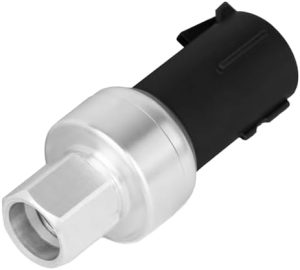
Air conditioning systems use pressure switches to manage internal pressure and prevent component failure. Here are some of the most common pressure switches you'll find:
Low Pressure Cut Out Switch (LPCO)
The LPCO shuts off the compressor if the system pressure drops too low, indicating a lack of refrigerant. It does this by creating an open circuit to the compressor's power supply, helping to prevent compressor damage. The LPCO is wired in series with the system's circuitry.
High Pressure Cut Out Switch (HPCO)
The HPCO protects the system from excessive pressure. If it senses that the pressure is too high, it creates an open circuit to the compressor's power supply to prevent damage. Like the LPCO, the HPCO is wired in series with the system's circuitry.
High Pressure Relief Valve (Pop Off Valve)
These valves were common in early vehicles. They’re located in the receiver drier, compressor, and/or hoses and look like a raised round dot. High pressure relief valves release refrigerant into the atmosphere if the system pressure gets too high. They operate with internal springs that close once the pressure returns to normal.
Compressor Cycling Switch
The compressor cycling switch controls the compressor clutch. It senses the pressure on the low side of the system and switches the compressor on when needed.
Fan Switch
This switch operates in the medium pressure range and turns the condenser fan on and off while the air conditioner is running.
Thermo Limiting Switch
This superheat switch has a fuse that melts at a certain pressure, creating an open circuit to the compressor's power supply to prevent damage.
