


A failing AC compressor rarely dies without warning. Most drivers miss the early signals because they look like minor inconveniences, until the system stops cooling entirely and they are facing a repair bill that can exceed $1,200 in parts alone. Knowing the AC compressor failing signs before the unit seizes can mean the difference between a $300 fix and a full system replacement. This guide covers every major symptom, what is actually happening inside the compressor, and when to act fast.
Table of Contents
Sign 1: Warm Air Blowing From the Vents
Sign 2: Loud or Unusual Noises When the AC Is On
Sign 3: Compressor Clutch Not Engaging or Moving
Sign 4: Refrigerant Leaks Around the Compressor
Sign 5: Electrical Issues and Blown Fuses
Sign 6: Unusually High Cabin Humidity
Sign 7: Visible Damage and Oil Staining on the Compressor
Quick Takeaways
-Warm air is the most common first symptom: When the compressor cannot build pressure, refrigerant stops cycling and the air coming through the vents quickly reaches ambient temperature.
-Grinding or rattling sounds signal internal bearing failure: Worn compressor bearings produce a metallic grinding noise specifically when the AC is switched on, not while it is off.
-A seized compressor clutch shows zero movement at idle: With the engine running and AC on, the center clutch plate should spin. If it is stationary, the compressor is not engaging at all.
-Refrigerant leaks accelerate total failure: Low refrigerant from a leak starves the compressor of lubrication, causing rapid internal wear that turns a small leak into a full replacement job.
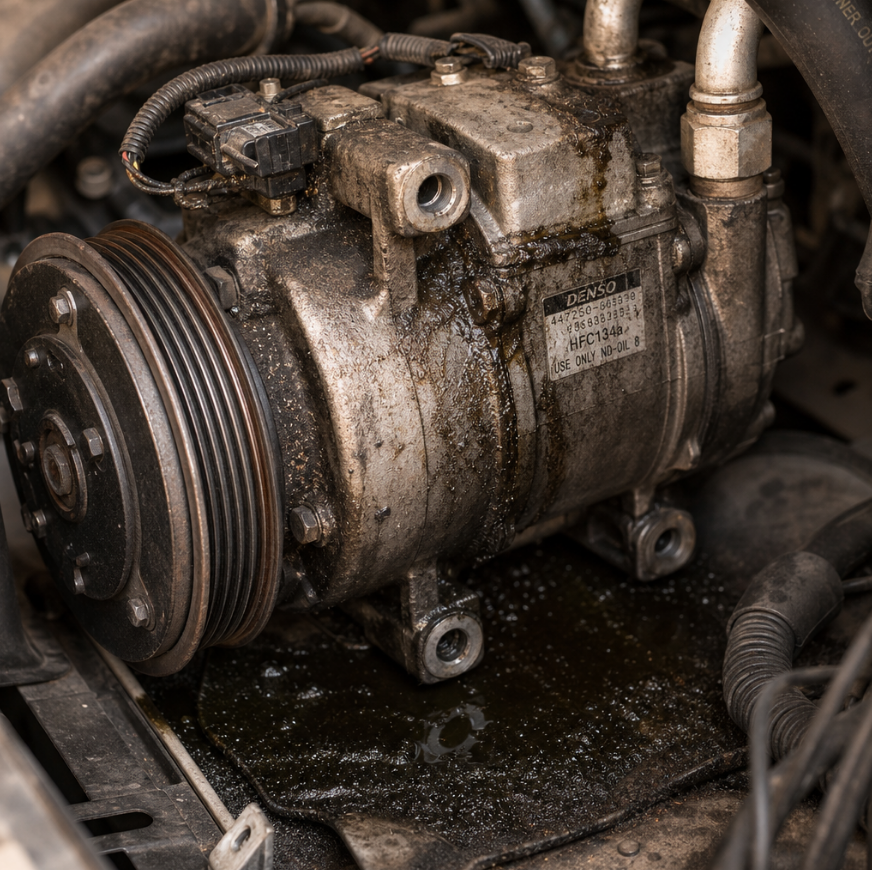
-Oil staining around the compressor confirms an active leak: Refrigerant oil mixed with refrigerant leaves a dark, greasy residue on hose fittings and the compressor body when a seal is failing.
-Electrical faults can mimic mechanical failure: A blown fuse, bad pressure switch, or corroded connector can prevent the compressor from engaging without any internal mechanical damage present.
-Catching symptoms early cuts repair cost significantly: A compressor that is replaced before it seizes will not contaminate the condenser, receiver-drier, and expansion valve with metal debris, saving hundreds in additional parts.
Sign 1: Warm Air Blowing From the Vents
Warm air from the vents is the single most reported AC compressor symptom drivers notice first. When the compressor is healthy, it pressurizes refrigerant so the system can transfer heat out of the cabin. Once internal components wear past the point of maintaining adequate pressure, the entire heat-exchange cycle breaks down.
In practice, the warm air symptom tends to appear intermittently at first. You might get cold air for ten minutes and then feel it gradually warming. That pattern points to a compressor that is engaging but cannot hold pressure under sustained load, often due to worn piston rings or a failing reed valve inside the unit.
Do not confuse this with a refrigerant charge issue. A low charge and a bad compressor both produce warm air, but the diagnosis method differs. A simple manifold gauge test will show low pressure across both the high and low sides if refrigerant is the problem. A failing compressor will show normal or even high low-side pressure because it cannot pump refrigerant efficiently.
Pro tip: Before assuming the compressor is gone, check the cabin air filter and condenser fins for blockage. A completely clogged condenser can reduce cooling performance drastically without any compressor fault present at all.

Sign 2: Loud or Unusual Noises When the AC Is On
Noise diagnosis is one area where paying careful attention pays off. Grinding, squealing, and rattling sounds that appear the moment you press the AC button and disappear when you turn it off almost always trace back to the compressor or its clutch assembly.
Grinding or Metallic Scraping
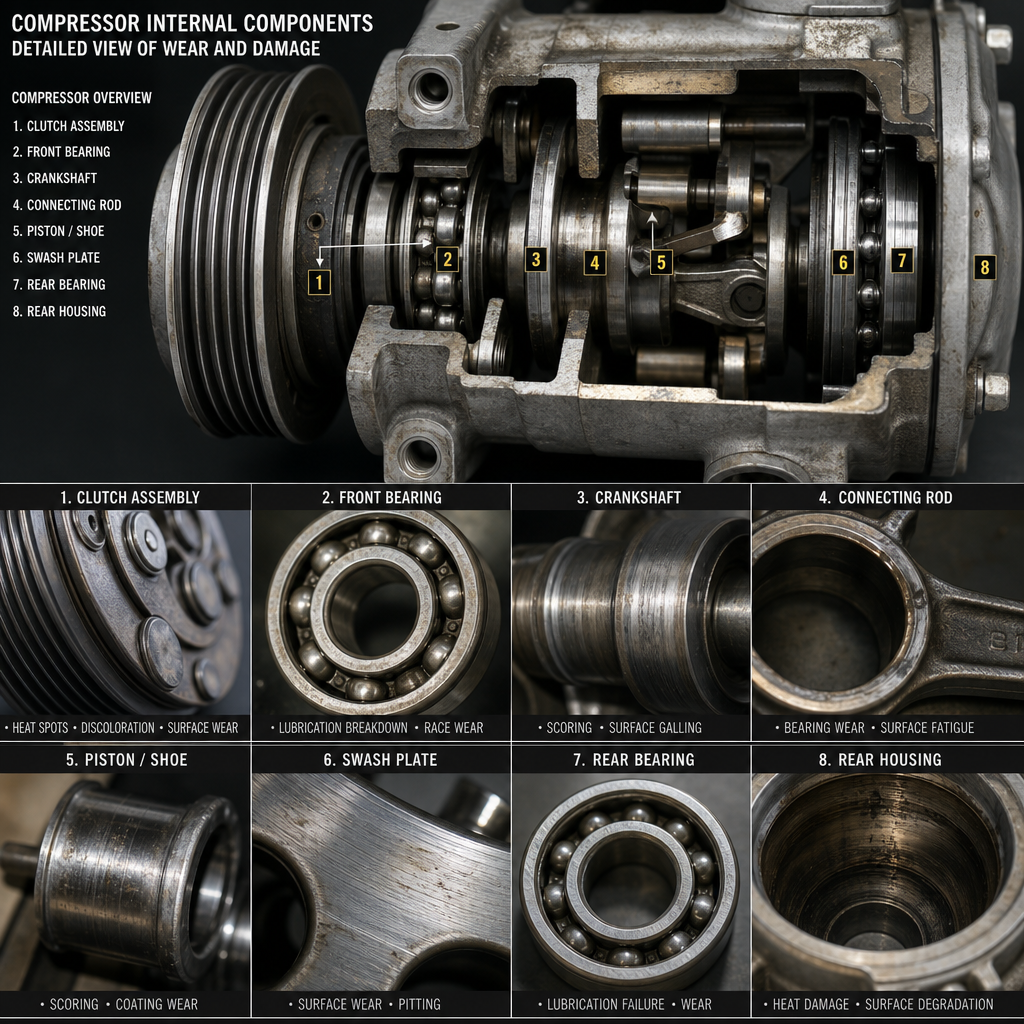
A grinding noise indicates the internal bearings are worn. The compressor has a main shaft bearing and, on many designs, a needle bearing in the clutch hub. Once these bearings start to fail, you will hear a low, consistent grinding that intensifies with engine RPM. Ignoring this sound typically leads to a seized compressor within weeks.
High-Pitched Squealing
Squealing at AC startup usually points to a slipping clutch, not internal bearing failure. The clutch electromagnetic coil may be weakening, or the clutch air gap may be too wide, causing the pulley to slip against the drive plate. In many cases, adjusting the clutch air gap to the manufacturer specification (typically 0.016 to 0.031 inches) resolves the noise without replacing the compressor itself.
Rattling or Knocking
A rattling sound can indicate loose compressor mounting bolts, a worn clutch bearing, or debris inside the compressor body. If the rattle is internal and accompanies reduced cooling, the compressor is shedding metal particles internally, which is a full-replacement situation. Those particles will travel through your refrigerant lines and destroy other expensive components.
Sign 3: Compressor Clutch Not Engaging or Moving
This is one of the easiest AC compressor symptoms to verify without any tools. With the engine running and the AC switched on at maximum cooling, look at the compressor pulley. The outer pulley ring always spins with the drive belt. The center clutch plate and hub should also be spinning. If only the outer ring is moving while the center plate stays still, the clutch is not engaging.
There are three common reasons the clutch will not engage. First, low refrigerant pressure triggers a pressure protection switch that cuts power to the clutch coil to prevent compressor damage from running without lubrication. Second, the clutch coil itself may have an open circuit. Test this with a multimeter: a healthy coil reads between 3 and 5 ohms. Third, the compressor may have seized internally, preventing the clutch from turning the shaft even when it does receive power.
In practice, checking for 12 volts at the clutch coil connector with the AC on tells you immediately whether the electrical side is sending a signal. No voltage means the problem is upstream in the controls or pressure switches. Voltage present with no clutch movement means the coil is dead or the compressor shaft is seized.
Sign 4: Refrigerant Leaks Around the Compressor
Refrigerant leaks around the compressor body are a direct warning that the shaft seal or O-ring fittings are deteriorating. The shaft seal is the most common failure point because it experiences constant rotational stress. Once it starts leaking, refrigerant escapes along with the compressor oil that lubricates the internal components.
A UV dye leak detection test is the most reliable DIY method for confirming a compressor leak. Most shops inject fluorescent dye into the system and use a UV lamp to identify the leak source. If the leak is at a hose fitting, you may be able to replace just the O-ring and recharge the system. If it is at the shaft seal, the compressor needs replacement.
"A refrigerant leak left unaddressed for more than one season typically results in compressor failure because the system ends up running with critically low lubrication." - ASE-certified technician guidance published by the National Institute for Automotive Service Excellence
Do not attempt to simply recharge a system with a known leak. Adding refrigerant to a leaking system is a temporary fix that delays the diagnosis and allows compressor wear to continue unchecked. Find the source, fix it, and then recharge properly with the correct refrigerant weight specified for your vehicle.
Sign 5: Electrical Issues and Blown Fuses
A compressor that is drawing too much current because of internal mechanical resistance will blow the AC fuse or trip the high-pressure cutout switch repeatedly. If you replace the fuse and it blows again as soon as the compressor tries to engage, the compressor is almost certainly starting to seize.
Electrical faults can also look exactly like mechanical failure without any mechanical problem being present. A corroded ground connection at the compressor clutch, a failed pressure switch, or a faulty AC relay can all prevent the system from working while the compressor itself remains perfectly healthy. This is an important diagnostic distinction because replacing a compressor unnecessarily is an expensive mistake.
The data consistently shows that technicians who skip the electrical diagnostic step first end up replacing parts they did not need to. Check fuse condition, test relay operation with a multimeter, verify both high-side and low-side pressure switch continuity, and confirm ground integrity before deciding the compressor is the problem.
Pro tip: When diagnosing AC electrical faults, test at the clutch coil connector first. Use a direct 12-volt jumper wire to the coil terminal. If the clutch engages immediately and the compressor spins freely, the compressor is mechanically sound and your problem is in the control circuit, not the compressor itself.
Sign 6: Unusually High Cabin Humidity
Car air conditioning does two things: it cools air and it removes moisture from it. When the compressor is failing and the system is not cycling properly, the dehumidification function breaks down first. You will notice the windshield fogging faster than usual and a generally damp, muggy feeling inside the cabin even when the fan is running at full speed.
This symptom on its own does not confirm a failing compressor, but combined with any of the other signs listed here, it is a reliable indicator that the system is not cycling refrigerant at full efficiency. High cabin humidity paired with air that is cool but not cold points to a compressor operating below capacity rather than one that has completely failed.
Sign 7: Visible Damage and Oil Staining on the Compressor
A visual inspection of the compressor takes about three minutes and can confirm an active problem instantly. Oil staining on the compressor body or at any hose connection means refrigerant oil is escaping along with refrigerant. The staining appears dark brown or black and has a greasy texture. You will often see it at the shaft seal area, at the high-side and low-side service port fittings, and at the hose manifold connections.
Physical cracks in the compressor body are less common but do occur, particularly on high-mileage vehicles where the unit has experienced thermal cycling for years. Any crack in an aluminum compressor housing is a replacement situation with no practical repair option.
Check the compressor mounting bracket and bolts as well. A loose compressor vibrates excessively, accelerates clutch wear, and can eventually crack the bracket or damage the refrigerant hoses at their connection points. Loose mounting hardware is one of the fastest fixes in automotive AC maintenance and one of the most commonly overlooked.
Frequently Asked Questions
How long does an AC compressor typically last before showing failing signs?
Most AC compressors last between 8 and 12 years or 100,000 to 150,000 miles under normal operating conditions. Compressors on vehicles that rarely use AC tend to fail sooner because the seals dry out from lack of lubrication. Running the AC for at least 10 minutes every few weeks, even in winter, extends compressor life by keeping seals conditioned.
Can I drive with a failing AC compressor?
You can drive with a failing compressor as long as the serpentine belt is not at risk. If the compressor is beginning to seize, continued use can lock up the belt drive system, which will disable your alternator and power steering simultaneously. If you hear grinding or the clutch is dragging, turn the AC off and get the compressor replaced before driving further distances.
Is it worth repairing an AC compressor or should I replace it?
In almost every case, replacement is the better choice over repair for a failed compressor. Rebuilding a compressor requires specialized equipment and the internal tolerance work that makes a rebuild cost-competitive is rarely achievable outside a professional rebuild facility. A quality remanufactured replacement unit costs less than a professional rebuild and comes with a warranty.
What happens if metal debris from a failed compressor gets into the AC system?
Metal debris from a seized or internally damaged compressor circulates through the entire refrigerant system and embeds in the condenser, receiver-drier, and expansion valve or orifice tube. Every one of those components must be replaced or flushed when a compressor fails due to internal mechanical damage. Skipping this step causes the new compressor to fail within hours because the debris immediately contaminates it.
How do I tell if my car's AC problem is the compressor or something else?
Start with the clutch engagement test described in Sign 3. If the clutch is engaging and the compressor is spinning, connect manifold gauges. Low pressure on both sides with the system running points to refrigerant loss. High low-side pressure combined with low high-side pressure points to a compressor that is not pumping efficiently. Normal pressures with warm air output often indicate a blend door or temperature sensor issue, not a compressor problem at all.
Can a failing AC compressor damage other parts of my car?
Yes. A compressor that seizes locks the drive pulley and can shred the serpentine belt. A compressor that sheds internal metal contaminates the condenser, dryer, and expansion device. A compressor with a severe refrigerant leak can run the system dry and cause the evaporator to freeze solid, restricting airflow through the HVAC system entirely. Early diagnosis prevents all of these cascading failures.
Have you noticed any of these AC compressor symptoms in your vehicle? Share your experience below so other drivers know what to watch for.
References
- United States Environmental Protection Agency official guidance on refrigerant handling regulations and technician certification requirements
- Automotive Service Association resources on AC system diagnostics and repair standards for professional technicians
- Consumer Reports automotive reliability data and vehicle maintenance cost research
- National Institute for Automotive Service Excellence training and certification standards for HVAC and AC system repair
- Statista automotive repair industry statistics and vehicle maintenance spending data


