

A failing driveshaft rarely announces itself all at once. Instead, it sends a series of early warnings that most drivers dismiss as road noise or tire imbalance, until the shaft separates at highway speed and the repair bill doubles. Driveshaft problems are responsible for a significant portion of preventable drivetrain failures, and the pattern is consistent: a small clunk or a slight vibration gets ignored for weeks, and what could have been a $150 U-joint fix turns into a $600 driveshaft replacement. Knowing what to look for, and when to act, is the difference between a quick swap and a tow truck call.
Table of Contents
- What Is a Driveshaft and What Does It Actually Do
- Bad Driveshaft Symptoms You Should Never Ignore
- Driveshaft Vibration: What Is Actually Causing It
- Diagnosing Driveshaft Noise from Clunks to Squeaks
- Comparing the Most Common Driveshaft Failure Points
- How to Inspect Your Driveshaft Without a Lift
- When to Replace vs. When to Repair
- Frequently Asked Questions
Quick Takeaways
| Key Insight | Explanation |
|---|---|
| Vibration that worsens with speed almost always points to a driveshaft issue | Tire imbalance vibrations plateau; driveshaft vibration escalates as RPM climbs, especially between 45 and 65 mph. |
| U-joint wear is the most common root cause of driveshaft problems | U-joints are the highest-wear component on any driveshaft. A dry or pitted U-joint causes both vibration and clunking noises. |
| A clunk on acceleration from a stop is a classic bad driveshaft symptom | This specific clunk occurs because a worn U-joint has play; torque loading causes the joint to snap into position. |
| Center support bearing failure often mimics transmission problems | A worn carrier bearing causes a low rumble that many technicians initially misdiagnose as a transmission or differential issue. |
| Grease-able U-joints last significantly longer with regular maintenance | Sealed U-joints have no service interval; greaseable versions serviced every 5,000 miles can last the life of the vehicle. |
| A bent driveshaft cannot be balanced back into safe service | Straightening a bent driveshaft is not a permanent fix. Any lateral run-out beyond 0.010 inches typically requires full replacement. |
| AWD and 4WD vehicles have multiple driveshafts, each with independent failure risks | On a 4WD truck, the front and rear driveshafts wear independently. A symptom present only in 4WD mode isolates the front shaft immediately. |
What Is a Driveshaft and What Does It Actually Do
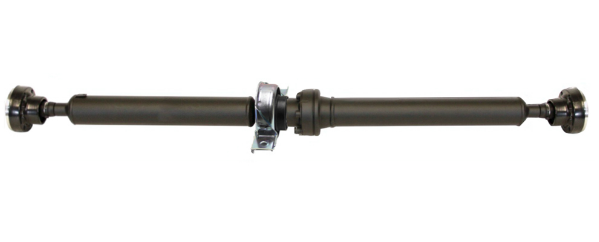
The driveshaft is the rotating tube that transfers torque from the transmission or transfer case to the differential. On rear-wheel-drive trucks and cars, it connects the output shaft of the transmission to the rear axle. On four-wheel-drive vehicles, there are typically two: one running to the front axle and one to the rear. On all-wheel-drive cars, the front-wheel-drive layout means the driveshaft often runs as a rear propeller shaft to power the rear differential.
The shaft itself is rarely the problem. What fails are the components that allow it to rotate at changing angles, specifically U-joints (universal joints), the center support bearing on two-piece shafts, and the slip yoke that accommodates suspension movement. When any of these components wear, the entire shaft runs out of balance or binds at certain angles.
In practice, a driveshaft on a half-ton pickup spinning at highway speed is rotating anywhere from 2,500 to 3,500 RPM. At that speed, even minor imbalance or joint slop translates into significant vibration transferred directly to the chassis.
Bad Driveshaft Symptoms You Should Never Ignore
The data consistently shows that most major driveshaft failures could have been caught and corrected at an earlier, cheaper stage. The symptoms follow a predictable progression. Here is what each stage looks like from inside the vehicle.
Clunking or Banging Sound During Acceleration or Deceleration
This is the single most reported bad driveshaft symptom among DIY mechanics. It appears when a U-joint has developed enough wear that a small amount of angular play exists at the joint. Under torque loading, the joint snaps from one extreme of that play to the other. The result is a distinct clunk felt through the floorboard, most noticeable when you tip into the throttle from a complete stop or lift off quickly at low speed.
A common mistake is attributing this clunk to a worn transmission mount or loose differential hardware before checking the U-joints. Always grab the driveshaft and attempt to rotate it by hand before assuming the problem is elsewhere. Any rotational play at all with the shaft indexed in a fixed position is a confirmed U-joint problem.
Squeaking Noise at Low Speed
A rhythmic squeak that matches vehicle speed, not engine RPM, and appears during slow parking-lot maneuvers almost always traces back to a dry U-joint. The joint is still functional enough to not clunk, but the needle bearings are running metal-on-metal without lubrication. If the joint is greaseable, a fresh zerk fitting shot often silences this immediately. If it comes back within days, the bearing cups are already scored and replacement is necessary.
Vibration Felt Through the Seat or Floor
This is where driveshaft vibration gets confused most often with tire and wheel issues. The test is simple: if the vibration appears at a specific speed range (often 45 to 65 mph) and does not improve when you back off slightly in a different gear that keeps the same road speed, the problem is speed-dependent and points to tire balance or wheel runout. If the vibration changes dramatically with engine load at the same road speed, or if it worsens as the vehicle warms up, the driveshaft or its mounts are the more likely culprit.
Pro tip: Record exactly what speed range the vibration appears and whether it changes under light acceleration versus engine braking. That single piece of information cuts diagnosis time in half when you bring the vehicle in or order replacement parts.
Shudder During Hard Acceleration
A shudder that appears specifically under full-throttle acceleration from low speed, common on lifted trucks and vehicles with significant driveline angles, indicates the U-joint is operating at an angle it was not designed to handle efficiently. This is especially common after a suspension lift where the driveshaft angles become steep without a corresponding carrier bearing drop or aftermarket high-angle U-joints. The joint binds cyclically through each rotation, producing a characteristic shudder rather than a steady vibration.
Driveshaft Vibration: What Is Actually Causing It
Driveshaft vibration has four primary root causes, and correctly identifying which one is present determines whether you need a $15 U-joint kit, a $60 carrier bearing, or a complete shaft replacement. Misdiagnosing the source wastes money and does not fix the vehicle.
Out-of-Balance Driveshaft
Factory driveshafts are balanced as an assembly. If the shaft takes a hard hit from road debris, has a balance weight knocked off, or is disassembled and reassembled out of phase, the balance is compromised. The vibration is smooth and sinusoidal, worst at a specific RPM band and improving above and below that range. This is a classic resonance symptom and requires a driveshaft shop with a balancing machine to correct.
Worn or Dry U-Joints
This accounts for the majority of driveshaft vibration complaints. As the needle bearings in the U-joint cups wear or lose lubrication, the joint introduces a velocity variation in the shaft's rotation, meaning the output side of the joint does not rotate at a perfectly constant rate relative to the input. This pulsing effect generates both vibration and noise. The vibration from a bad U-joint tends to be harsher and more irregular than balance-related vibration.
Worn Carrier Bearing
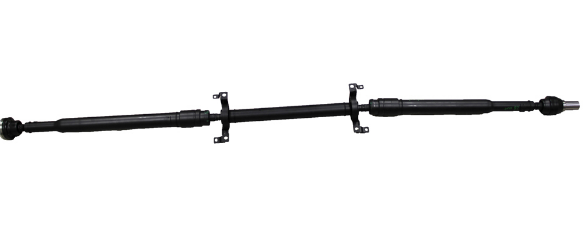
Two-piece driveshafts found on longer-wheelbase trucks and vans use a center support bearing mounted to the vehicle frame or crossmember. When this bearing wears, the center section of the shaft develops a wobble that sends vibration through the entire vehicle. The feel is often described as a low, constant thrum rather than a sharp vibration, and it is commonly felt more in the seat than in the steering wheel.
Slip Yoke Problems
The slip yoke allows the driveshaft to change length as the suspension compresses and extends. A worn or dry slip yoke creates a binding condition where the shaft fights suspension travel instead of accommodating it. The result is a jerky, lurching sensation at low speed on uneven surfaces, and sometimes a vibration that appears only when the suspension is loaded in a specific position.
Diagnosing Driveshaft Noise from Clunks to Squeaks
Noise diagnosis requires mapping three variables: what the sound is, when it happens, and where it is felt. A clunk that appears only when shifting from drive to reverse, with no noise during steady driving, almost exclusively points to a U-joint with angular play rather than a balance or bearing issue. A squeak that appears only when cold and disappears after five minutes of driving suggests a U-joint that is marginally dry but still has functional bearing material, common in high-mileage vehicles with sealed joints.
"Universal joints should be inspected at every oil change on high-mileage vehicles. The cost of a U-joint kit is trivial compared to the labor and parts involved in a full driveshaft replacement after catastrophic failure." - ASE (Automotive Service Excellence) technical guidance on drivetrain maintenance.
A grinding noise that increases with vehicle speed and feels like it is coming from the center of the vehicle underneath the floorboard is a strong indicator of carrier bearing failure. Unlike U-joint noise, carrier bearing noise does not usually change character with throttle input. It is speed-dependent almost exclusively.
Ticking or clicking noises at low speed in turns point away from the driveshaft entirely and toward CV axle issues on front-wheel-drive and independent rear suspension vehicles. This distinction matters because the repair is completely different. Driveshaft clunks happen on straight-line acceleration; CV joint clicks happen in turns under load.
Pro tip: With the vehicle safely on jack stands in neutral, spin the driveshaft by hand and feel for roughness, gritty resistance, or any angular play at each U-joint. This takes about four minutes and eliminates guesswork before ordering any parts from BuyAutoParts.com.
Comparing the Most Common Driveshaft Failure Points
Understanding the differences between failure types helps prioritize both diagnosis and repair budget. The table below covers the three most common driveshaft failure components and how to distinguish them.
| Failure Component | Primary Symptom | DIY Repairability |
|---|---|---|
| U-Joint (Universal Joint) | Clunk on throttle application, squeaking at low speed, vibration in 45-65 mph range | High. U-joint kits are affordable and can be pressed in with basic tools or a bench vise. |
| Center Support (Carrier) Bearing | Low thrum felt in seat at highway speed, vibration that does not change with throttle input | Moderate. Requires driveshaft removal and a press to seat the new bearing correctly. |
| Driveshaft Imbalance or Damage | Smooth vibration at specific speed band, visible dents or missing balance weights on the tube | Low. Balancing requires specialized equipment. A bent shaft requires full replacement. |
How to Inspect Your Driveshaft Without a Lift
You do not need a four-post lift to do a credible driveshaft inspection. A floor jack, two jack stands, and a flashlight are sufficient for a complete preliminary assessment on most trucks and rear-wheel-drive cars.
Step 1: Safely Raise the Vehicle and Support It
Jack the drive wheels clear of the ground and place the vehicle on rated jack stands at the frame. Never perform this inspection with the vehicle supported only by a floor jack. Transmission in neutral, parking brake off at the wheels you want to spin.
Step 2: Inspect U-Joints Visually First
Look for rust weeping from the bearing cups, which indicates the seal has failed and water has entered. Look for any grease thrown outward onto surrounding components, which indicates a seal has blown from overpressure or wear. Either finding is a confirmed replacement indicator regardless of how the joint feels by hand.
Step 3: Check for Play by Hand
Grip the driveshaft near each U-joint and attempt to rotate it while holding the adjacent yoke stationary. Any rotational play at all is abnormal. Then push and pull axially at the slip yoke end and check for excessive in-and-out movement, which points to a worn slip yoke or worn transmission output shaft bushing.
Step 4: Spin the Shaft and Feel for Roughness
Rotate the shaft by hand through a full turn while feeling for any roughness, binding, or gritty sensation through the U-joints. A healthy joint spins freely with no perceptible resistance variation. Any roughness during rotation means the bearing cups are worn and the joint needs replacement before the next long drive.
When to Replace vs. When to Repair
The repair-versus-replace decision on driveshafts is more straightforward than it seems. If the shaft tube is straight, uncracked, and the only issue is worn U-joints or a failed carrier bearing, a component-level repair is the right call. A quality U-joint kit sourced from a reputable supplier like BuyAutoParts.com will restore full function for a fraction of a complete shaft replacement cost.
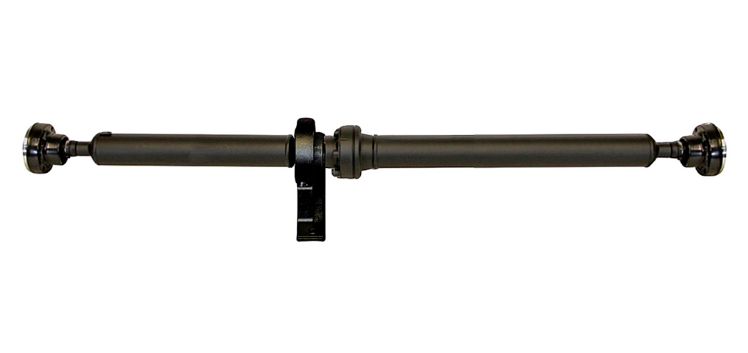
Replacement of the complete shaft is necessary when the tube is bent or dented, when a previous repair has already been attempted and the vehicle still vibrates after proper balancing, or when the shaft is a high-mileage unit where multiple components are at or near end of life simultaneously. In practice, replacing a driveshaft on a 200,000-mile pickup that already has a marginal carrier bearing, two suspect U-joints, and a scored slip yoke makes more economic sense than chasing each component separately over the next two years.
On high-performance and off-road applications, an upgraded aftermarket shaft with stronger U-joints and a heavier tube wall is worth considering over an OEM replacement, particularly if the application involves larger tires, a lift kit, or regular towing. The factory shaft is engineered for stock ride height and stock power levels.
Frequently Asked Questions
Can I drive with a bad driveshaft?
Driving on a confirmed bad driveshaft is a serious risk. A U-joint that has visible rust, play, or has thrown grease can separate without further warning. When a driveshaft drops at highway speed it can spear the ground and vault the vehicle, or wrap around the axle and lock the drive wheels instantly. Short, slow trips to a repair facility may be acceptable with a mildly worn joint, but continued highway driving is not safe once symptoms are confirmed.
How much does a driveshaft replacement cost?
U-joint replacement is a DIY job with parts typically ranging from $15 to $60 per joint depending on vehicle application. A complete OEM replacement driveshaft ranges from $150 to $400 for most domestic trucks and cars when sourced from an aftermarket supplier. Dealer pricing runs significantly higher. Labor at a shop adds $75 to $200 depending on complexity. The total cost for a professional shop driveshaft replacement with a quality aftermarket shaft typically lands between $250 and $600.
How do I tell driveshaft vibration apart from tire vibration?
The most reliable field test is to maintain the speed where vibration occurs but shift to a different gear that produces the same road speed. If vibration stays identical, the problem is speed-related and points to tires or wheels. If vibration changes with gear selection at the same road speed, the frequency is RPM-dependent and the driveshaft, transmission output, or drivetrain is the source. Driveshaft vibration is also typically felt more in the seat and floorboard than in the steering wheel, which tends to carry wheel and tire imbalance more directly.
What causes a driveshaft to go bad prematurely?
Three conditions accelerate driveshaft wear: neglected U-joint lubrication on greaseable designs, incorrect driveline angles from suspension modifications, and regular off-road use that introduces shock loading beyond the component design limits. Towing heavy loads consistently also accelerates wear by sustaining high torque transmission through the joints for extended periods. On lifted trucks, the increased driveshaft angle alone can cut U-joint service life by 30 to 50 percent if the geometry is not corrected with a carrier bearing drop or adjustable control arms.
Do front and rear driveshafts on a 4WD truck fail at the same rate?
No. The rear driveshaft on most 4WD trucks spins constantly during normal driving and accumulates wear faster. The front driveshaft on a part-time 4WD system only engages when 4WD mode is selected, so it typically has significantly less wear at the same vehicle mileage. However, the front shaft often sits in a more aggressive angle and sees more abuse when the vehicle is used off-road, which can accelerate wear selectively on front shaft U-joints even with lower total operating hours.
Is a rebuilt driveshaft as reliable as a new one?
A professionally rebuilt driveshaft with new U-joints, a new carrier bearing, and proper balancing is fully equivalent to a new unit in practice. The shaft tube itself does not wear in normal use. The concern with rebuilt shafts is quality control during reassembly, specifically whether the new joints were installed in phase and whether the shaft was balanced after the rebuild. A shaft rebuilt by a qualified driveshaft shop or sourced from a reputable supplier meets that standard. A budget rebuild that skips the balancing step will vibrate immediately.
Have you dealt with a driveshaft vibration or clunk on your vehicle? Share what symptom led you to the diagnosis and whether it matched one of the failure types covered here.
References
- National Highway Traffic Safety Administration (NHTSA): vehicle safety standards and drivetrain failure recall data
- ASE (Automotive Service Excellence): technician certification standards and drivetrain diagnostic guidelines
- SAE International: engineering research on driveline vibration, U-joint design, and drivetrain durability standards
- Statista: automotive repair market data and consumer spending on drivetrain components
- Forbes Wheels: automotive maintenance cost analysis and repair cost benchmarking for vehicle owners


